LO1: Understand the features of a single camera production.
Fact File;
This is a fact file on single and multi camera productions as well as facts and definitions on Series, Single Drama and Serials and where we can find them, as well as the mainstream platforms and alternative platform that you might watch these programs and productions on.
This is a fact file on single and multi camera productions as well as facts and definitions on Series, Single Drama and Serials and where we can find them, as well as the mainstream platforms and alternative platform that you might watch these programs and productions on.
Single Camera Production:
The single camera setup, or single camera mode of production. Can also be recognised by ‘Portable Single Camera’. It is a method of filmmaking and video production. A single camera is employed on the set and each shot to make up a scene it taken independently. The single-camera setup gives the director more control over each shot, but is more time consuming and expensive than multiple-camera. The choice of single-camera or multiple-camera setups is made separately from the choice of film or video. Multiple-camera setups shot on video can be switched live on tape during the performance, while setups shot on film still require that the various camera angles be edited together later. Some disadvantages of single camera production are that only having one camera means you have to move it and keep setting it back up every time you want to film a different scene. If the camera is damaged / broken you may all of your work as it hasn’t been captured by other cameras too. Time consuming due to moving the camera around. Can be hard to reproduce scenes which would be easy to overcome if using multiple cameras. In terms of advantages, low budget as you’re only using one camera instead of multiple cameras. Don’t have to worry about other cameras being in shot allows more flexibility with shots. Easier to gather all the shots together as they’re all on one camera. One camera is easier to carry around / set up / take down. Can rent cameras from companies, which will be cheaper than buying one, very good for low budget films .Directors have more control over each shot, whereas with multiple cameras there would be someone with responsibility for that camera.
Here is a representation of a ‘Single Camera Production’.

What is a Multi Camera Production?:
Just like the name of the camera production, you can have multiple cameras recording your footage, the cameras will simultaneously record or broadcast a scene. Generally, the two outer cameras would shoot close up or cross shots of the two most active characters on the set at any time, while the central camera or cameras shoot a wider master shot to capture the overall action and establish the room. In this way, multiple shots are obtained in a single take without having to start and stop the action. This is more efficient for programs that are to be shown a short time after being shot as it reduces the time spent editing or shooting In terms of advantages, the multi camera production is more efficient in Time Saving, for example if you wish to view the same scene from many different angles, using a single camera set up would require the scene to be acted out three times. With a multi-camera set up footage of all three angles can be recorded at once. Live Events, some events occur live and simply could not be repeated so that they could be filmed from multiple angles. This may include things such as sports matches or concerts. A live audience, sometimes it is beneficial for a television show to have a live studio audience, to provide feedback to the writers and director in regards to the reception of their production and also to provide a laugh track. A multi-camera set up enables the scene to flow and allows the audience to react. Continuity, there would be less continuity errors using a multi camera set up as the scene would only be being acted once. Editing, it will not be necessary to use time and money editing as this will have been done during production using a vision mixing desk. Despite the above points there are times when Single camera production is a more viable option. Here are the con’s of Multi-camera production. Less flexibility, There are limited options on where camera’s can be placed in a scene. For example you may not be able to do an over the shoulder or point of view shot for fear of getting the recording equipment caught on camera. Lighting compromises, it will take a lot longer to light a multi-camera shoot than it would a single camera production because more of the scene will be on show. A better lighting setup would be achieved if the cinematographer only had to focus on how the scene would look from one camera angle. Also it is important to remember there are more people on set and avoid placing lights in places that could cast shadows across a scene.


Cost:
One important thing to consider in any type of production is Cost. Initially equipment costs were what prevented multi-camera set ups from being used. However in recent years equipment costs have lowered. Multi-camera may in some cases be the cheaper option nowadays if you consider the amount of money spent on locations, crew, and actors in a much longer single camera production. The price for a multi camera production may be much higher at the start of filming compared to a single camera production but as the single camera production takes much longer to complete the prices may add up to be much more than cost of multi camera production, due to it being much quicker
What is a Series?:


Where can we find these?:


What is a Series?:
A series is a set or sequence of related television or radio programmes. Or can mean a number of events, objects, or people of a similar or related kind coming one after another. But for TV and Film we’ll stick with the former. A television series that is intended to comprise a limited number of episodes may be called a miniseries or serial. A Series without a fixed length are usually divided into seasons or series early or semiannual sets of new episodes. While there is no defined length, US industry practice tends to favor longer seasons than those of some other countries. With the broadcasting of a series it depends on the country broadcasting it, for example British television broadcasters tend to lean toward shorter series in recent years, a good example of this is 'Doctor Who', a British television show, in 1963 featured forty-two 25‑minute episodes, this dropped to 25 by 1970 to accommodate changes in production and continued to 1984. For in 1985 fewer but longer episodes were shown, but even after a return to shorter episodes in 1986, lack of support within the BBC meant fewer episodes were commissioned leading to only fourteen 25‑minute episodes up to those in 1989 after which it was cancelled. But the revival of Doctor Who from 2005 has comprised thirteen 45‑minute instalments. However, there are some series in the UK that have a larger number of episodes, for example Waterloo Road started with 8 to 12 episodes but from series three onward, it increased to 20 episodes, and series seven will contain 30 episodes.
However in America it is completely different A full season is sometimes split into two separate units with a hiatus around the end of the calendar year, such as the first season of Jericho on CBS. When this split occurs, the last half of the episodes sometimes are referred to with the letter B as in "The last nine episodes (of The Sopranos) will be part of what is being called either Season 6, Part 2 or Season 6B, or in Futurama it splits its seasons similar to how South Park does, doing half a season at a time, so this is season 6B for them. Since the 1990s, these shorter seasons also have been referred to as "5" or half seasons, where the run of shows between September and December is labeled "Season X", and the second run between January and May labeled "Season X.5". Examples of this include the 2004 incarnation of Battlestar Galactica and ABC Family's Make it or break it.
However in America it is completely different A full season is sometimes split into two separate units with a hiatus around the end of the calendar year, such as the first season of Jericho on CBS. When this split occurs, the last half of the episodes sometimes are referred to with the letter B as in "The last nine episodes (of The Sopranos) will be part of what is being called either Season 6, Part 2 or Season 6B, or in Futurama it splits its seasons similar to how South Park does, doing half a season at a time, so this is season 6B for them. Since the 1990s, these shorter seasons also have been referred to as "5" or half seasons, where the run of shows between September and December is labeled "Season X", and the second run between January and May labeled "Season X.5". Examples of this include the 2004 incarnation of Battlestar Galactica and ABC Family's Make it or break it.
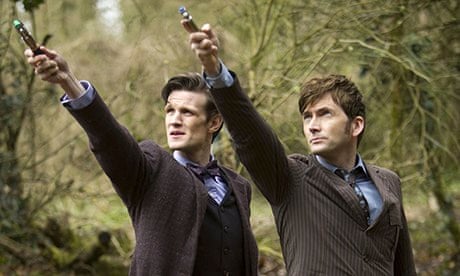
Here is an Example of a series; For Example, Doctor Who is a long running British TV Series..


What is a Serial?:
A serial is a story or play appearing in regular instalments on television or radio or in a magazine. the term is used as a noun to refer to a format, within a genre, by which a story is told in contiguous instalments in sequential issues of a single periodical publication. A drama serial are a series of television programs and/or radio programs that rely on continuing plot that unfolds in a sequential episode by episode fashion. An example of this is would be Homeland. Homeland is a Serial drama television series.
What is a Single Drama?:
A single drama is a show that finishes within the time it’s shown, and never returns. Loads of different single dramas have many different genres depending on the storyline. The single drama used to be a staple of television but is now quite rare. Single dramas are often based on topical issues. A good example of a Single Drama would be ‘A poet in New York’.
Where can we find these?:
Well, Television series are extremely popular right now, especially with On Demand Movie and Tv companies such as Netflix and Amazon Prime, it is now easier than ever to watch them. TV series are definitely in the mainstream platform in media. For example, two of the biggest shows in the world, Game of Thrones and The Walking Dead receive large amounts of audiences to each episode. The Game of Thrones Season 5 Finale drew 8.1 Million viewers to watch at the regular broadcasting time. While The Walking Dead had received 15.8 Million viewers, shattering the record for the most watched Television finale of all time. Single Drama’s however are not as popular and aren’t always in the mainstream media and tends to be popular around a certain audience of people that like the genre, rather than the wide groups of audiences that watch shows like Game of Thrones and The Walking Dead, they usually can be found late on TV Channels like BBC One and Two.
In what media platforms (mainstream & alternative) can we find them?
The mainstream platform would contain the terrestrial television programs such as BBC 1 and ITV etc, Freeview would also be on the mainstream platform as it is free to use and every television has it. Alternative media platforms however include, streaming services like Netflix, LoveFilm and amazon prime, that have a large collection of various TV shows and movies. It also is online websites such as YouTube and on demand channels like 4OD and BBC iPlayer.
No comments:
Post a Comment